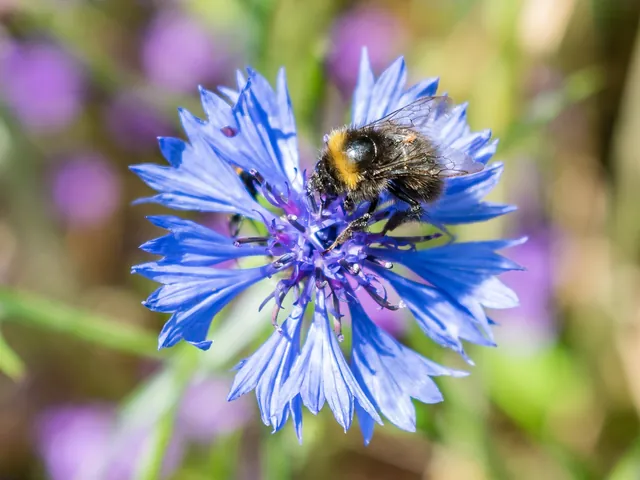
Cornflower
Centaurea cyanus
Once a weed of cornfields across Europe, now a conservation priority. Its blue comes from a pigment complex so precise it is still studied by chemists.
Blue flower photo gallery
Fewer than one flowering plant in ten can make a blue flower — which is exactly why we collect them. FlowerBlue is a gallery of cornflowers, bluebells, forget-me-nots, delphiniums, gentians and the legendary Himalayan blue poppy. Browse the pictures, learn each flower's name and meaning, and find out when it blooms.
The gallery
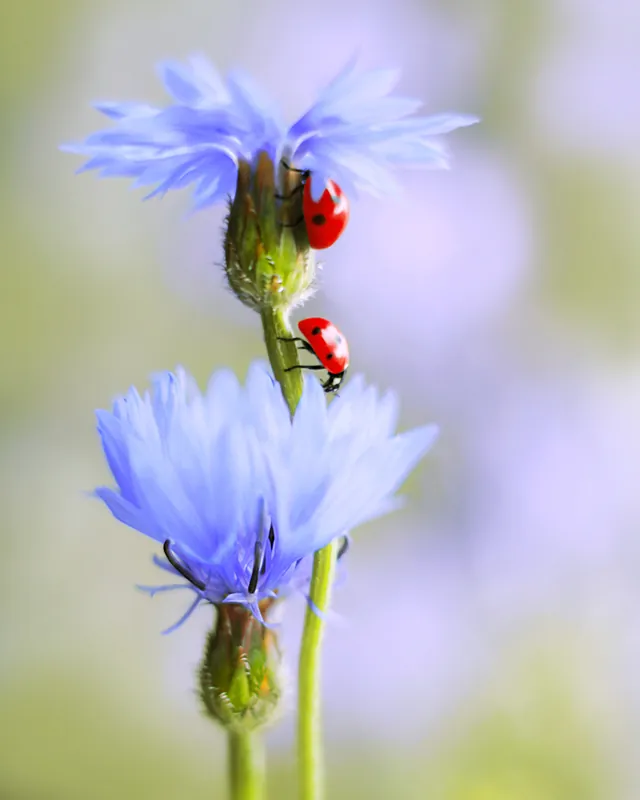
Sixteen hand-picked photos of blue flowers from woodlands, alpine meadows, prairies and garden borders. Click any picture to see it larger.
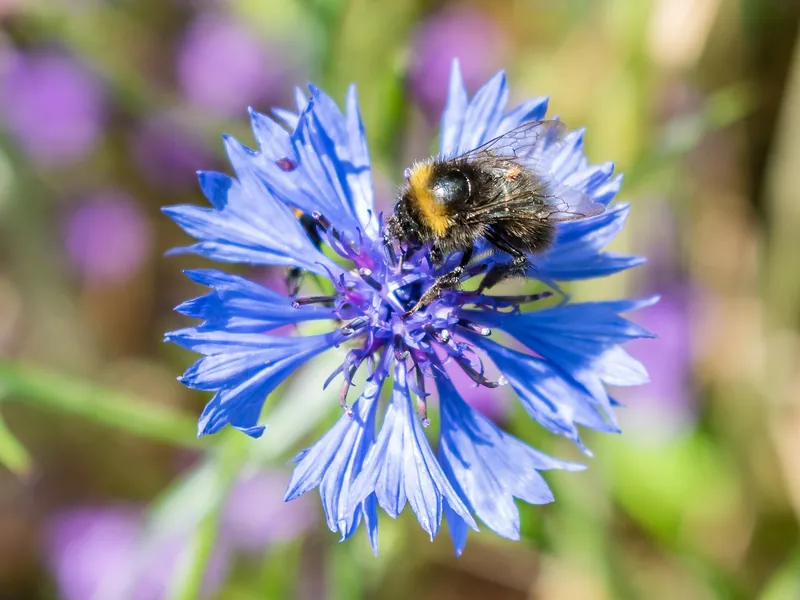
Centaurea cyanus — the flower that gave "cornflower blue" its name.
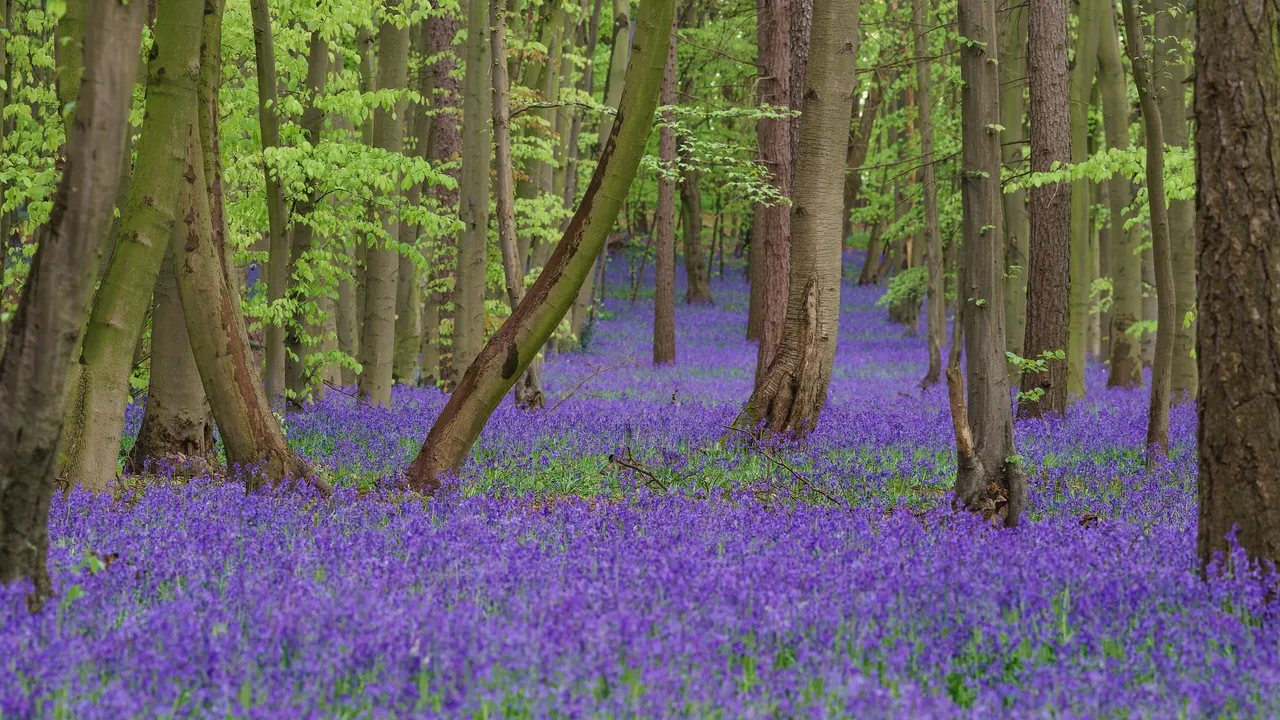
A whole forest floor turning blue for three short weeks.
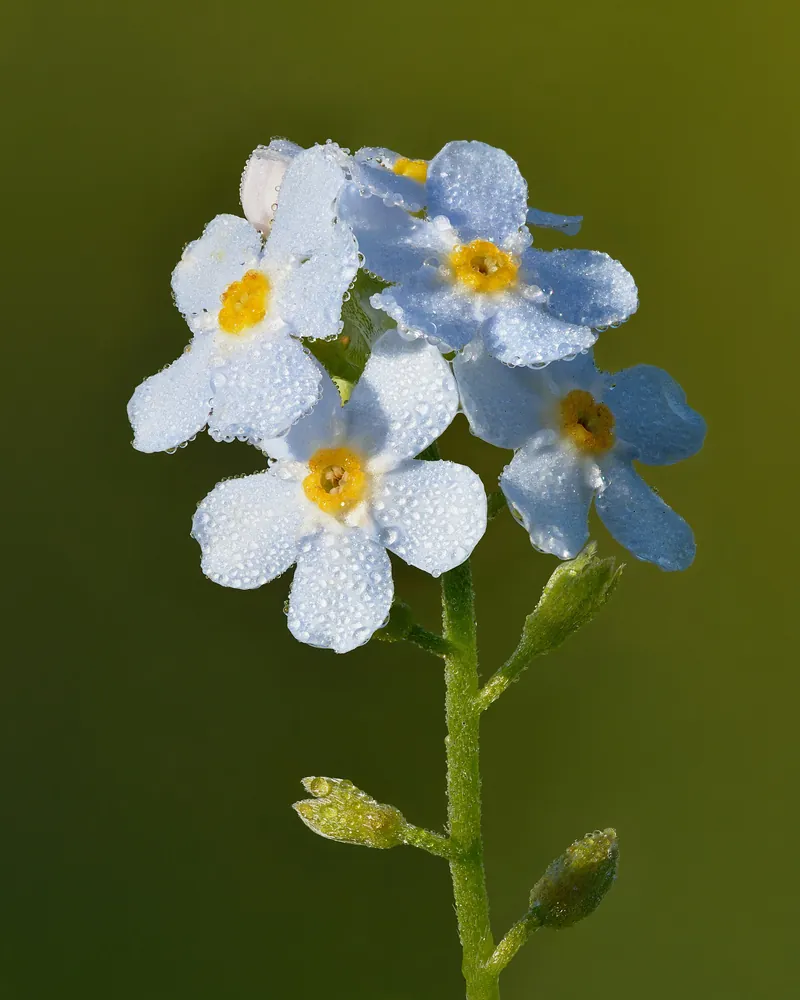
Tiny sky-blue stars with a golden eye at the centre.
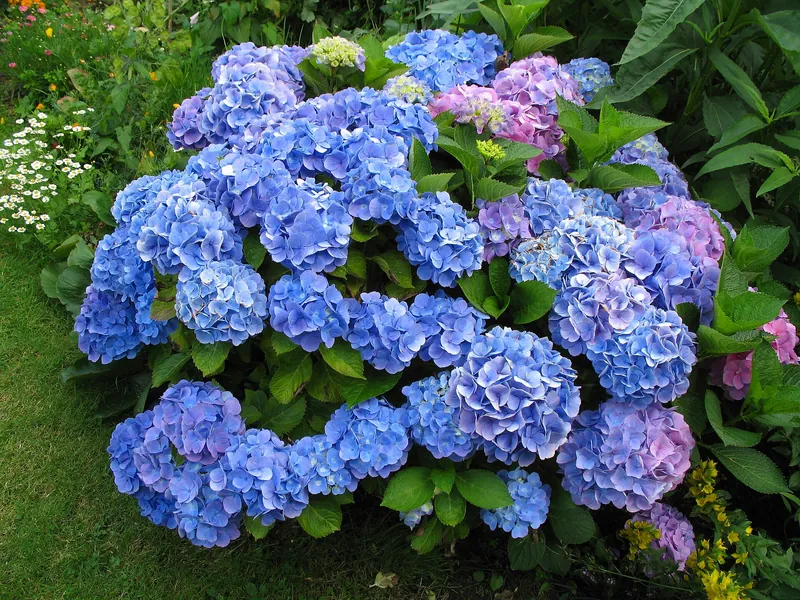
The only blue flower you can tune yourself, with acid soil.
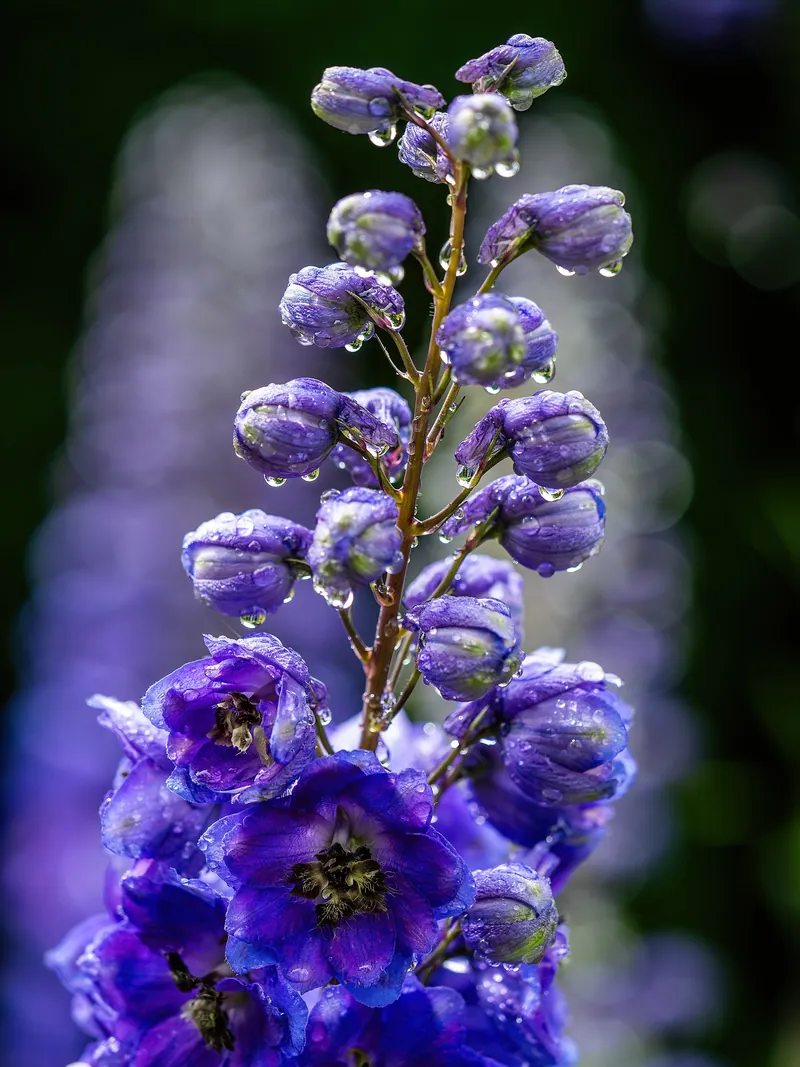
Towers of blue that carry the pigment named after them.
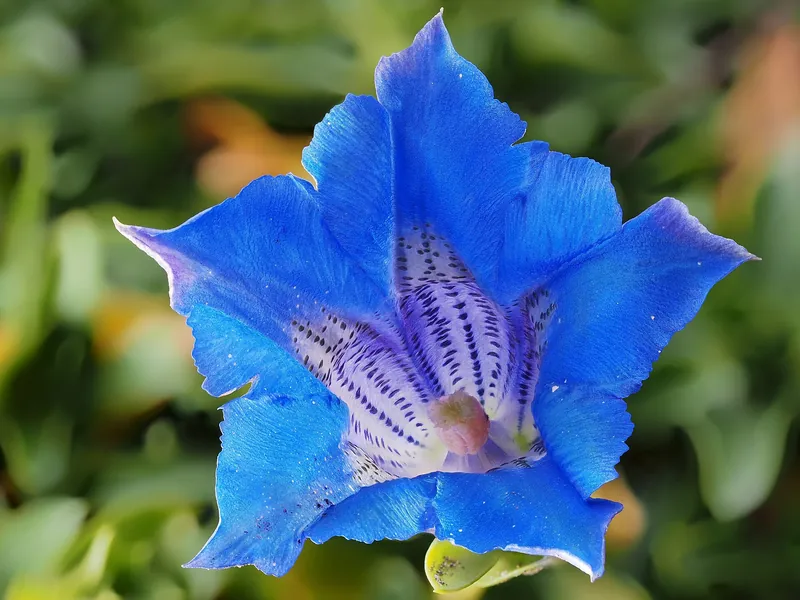
Gentiana acaulis, the benchmark for "gentian blue".
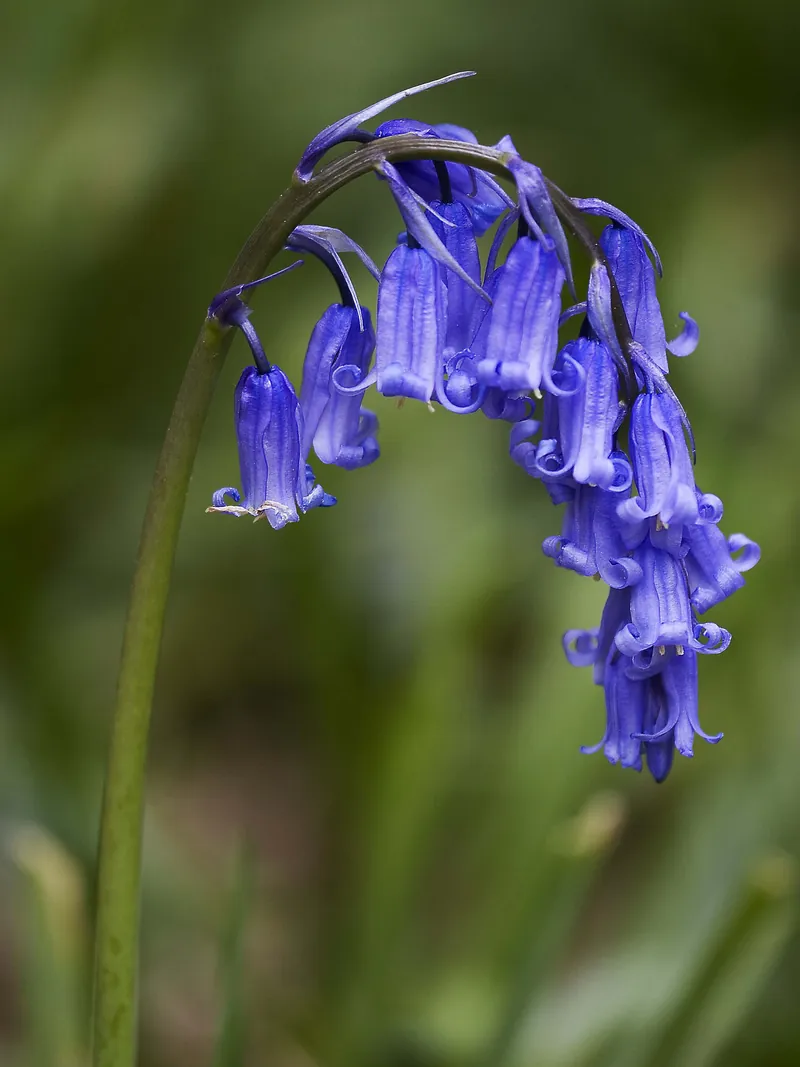
Nodding bells with rolled-back tips and a sweet scent.
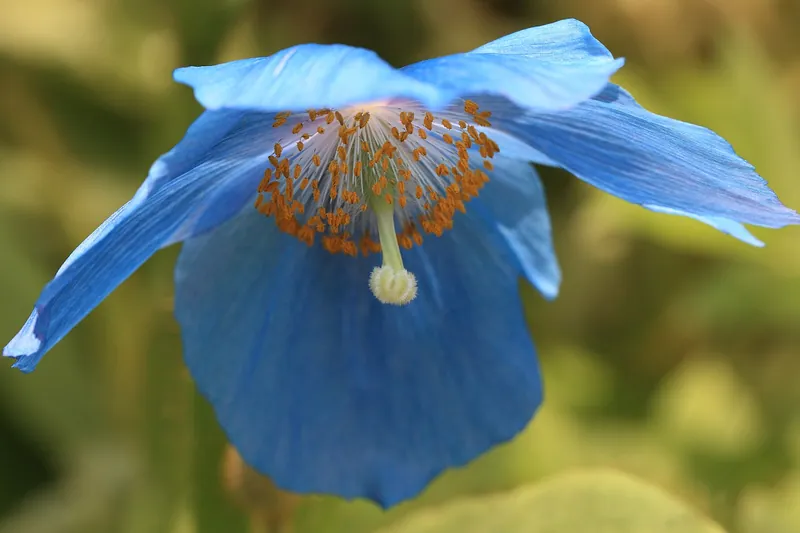
Meconopsis betonicifolia, the plant collector's holy grail.
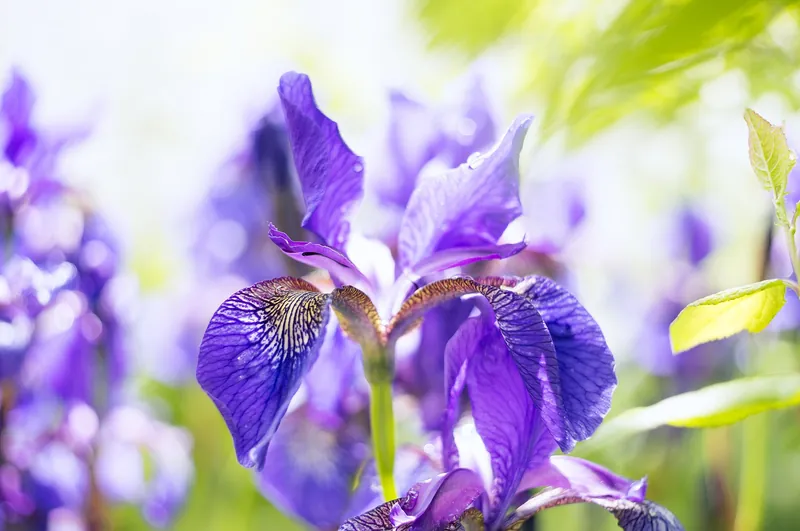
Named for Iris, the Greek goddess of the rainbow.
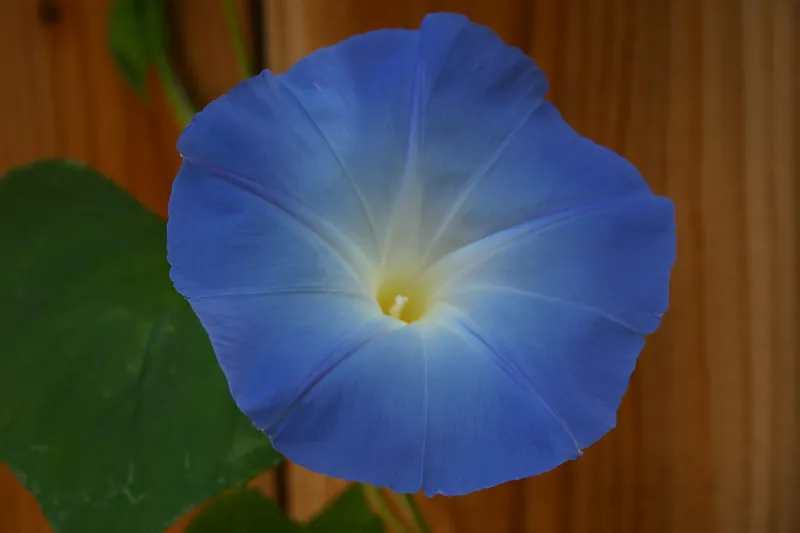
Opens blue at dawn and fades to pink by the afternoon.
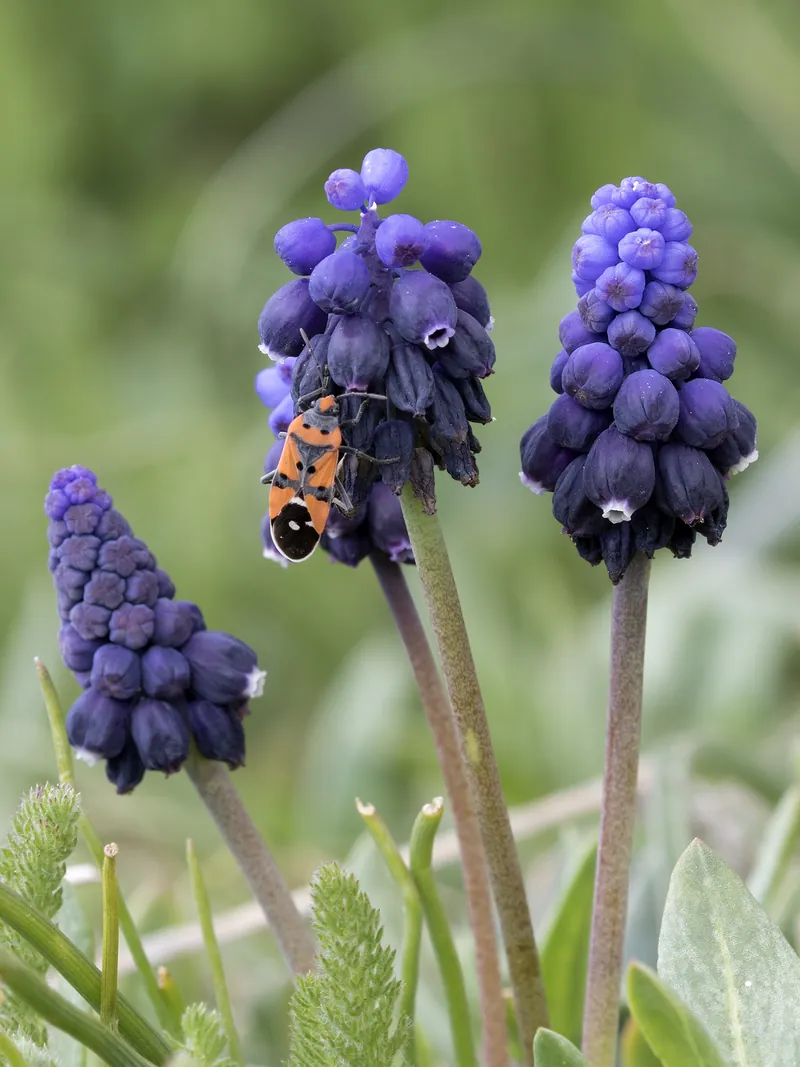
Muscari — bunches of miniature blue grapes on a stem.
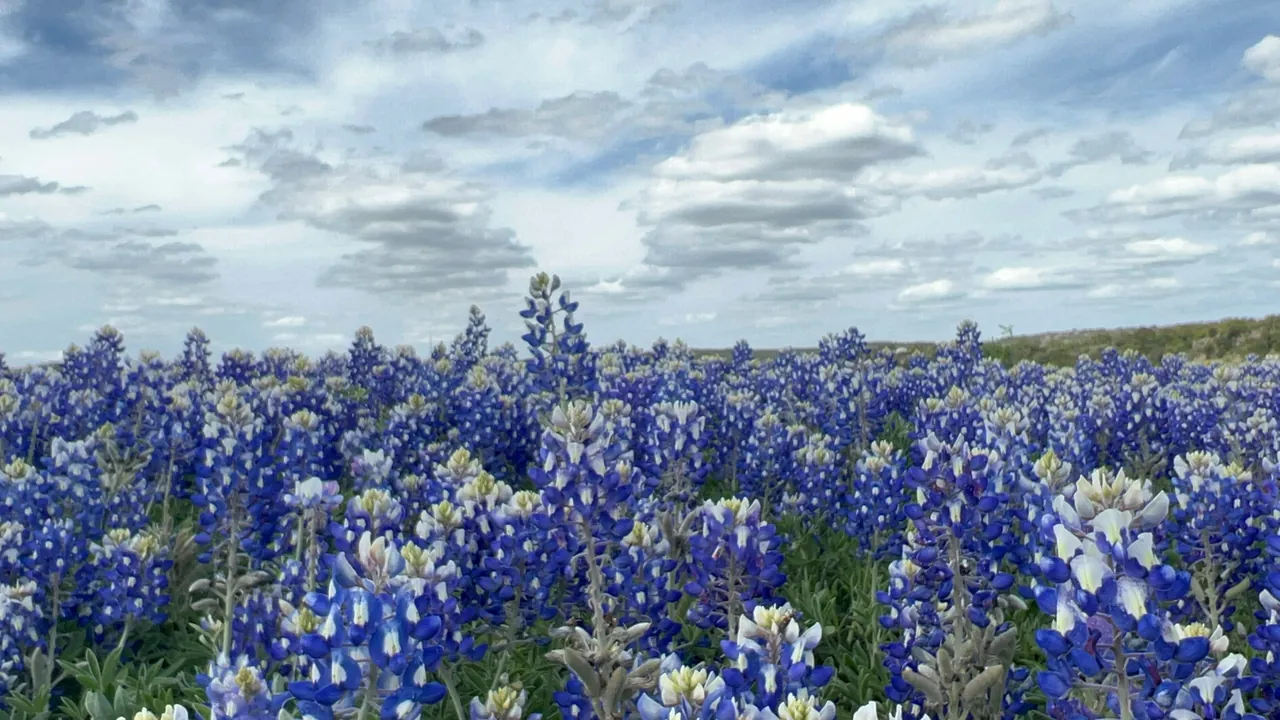
The state flower of Texas, painting whole roadsides blue.
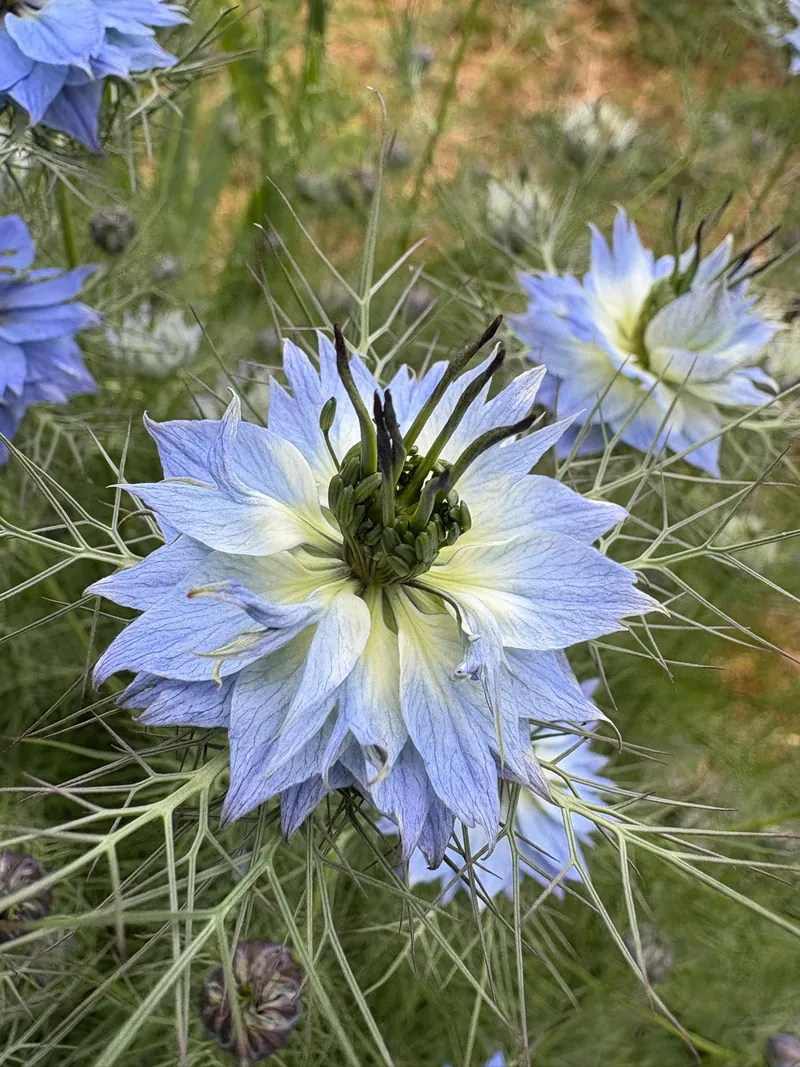
Nigella damascena, floating in a veil of green threads.
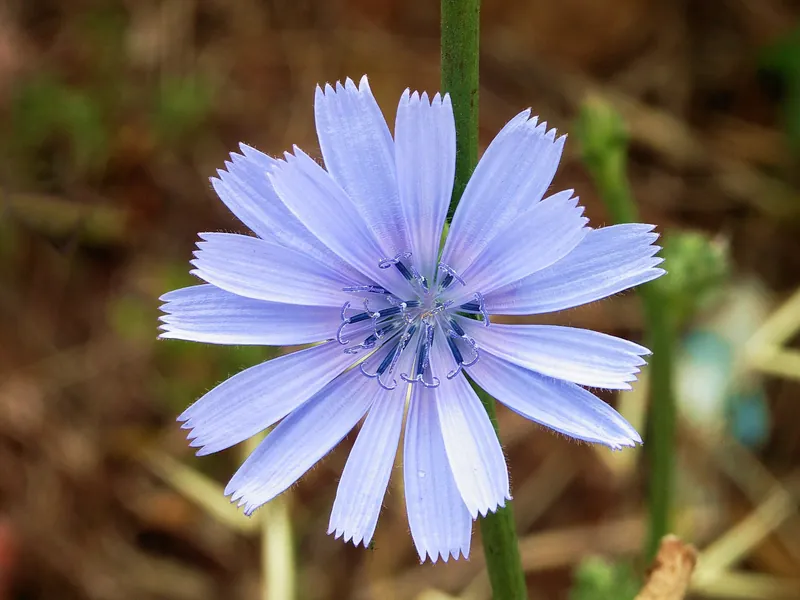
The roadside blue that closes up by early afternoon.
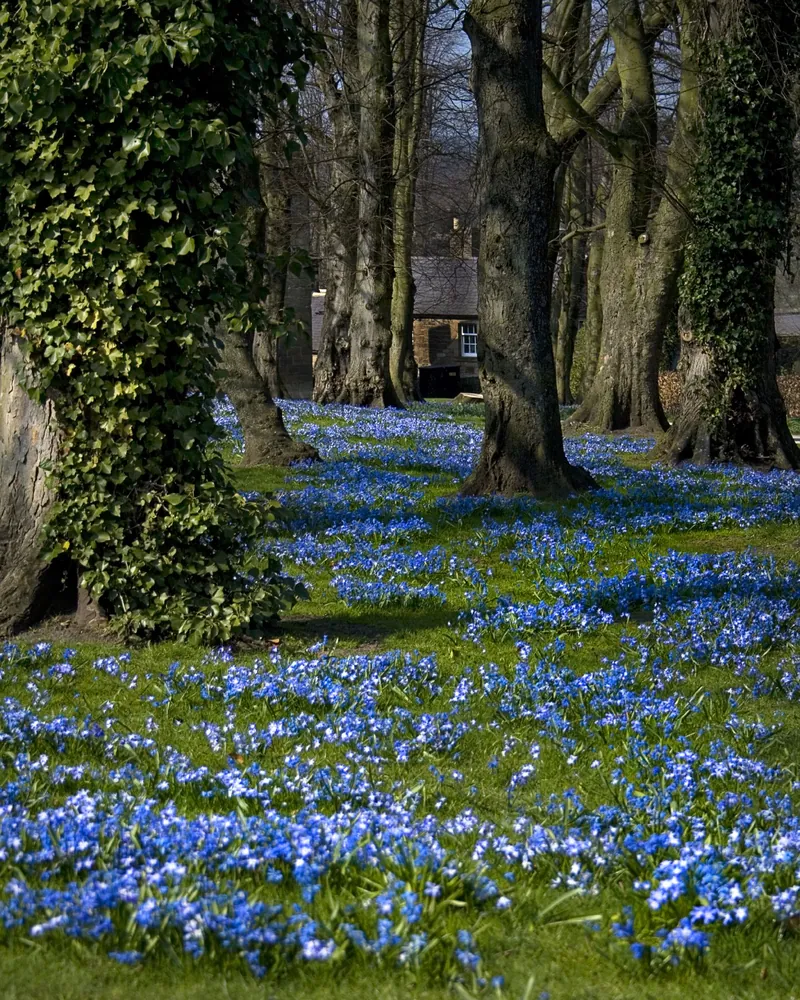
Thousands of tiny bulbs turning lawns into blue water.
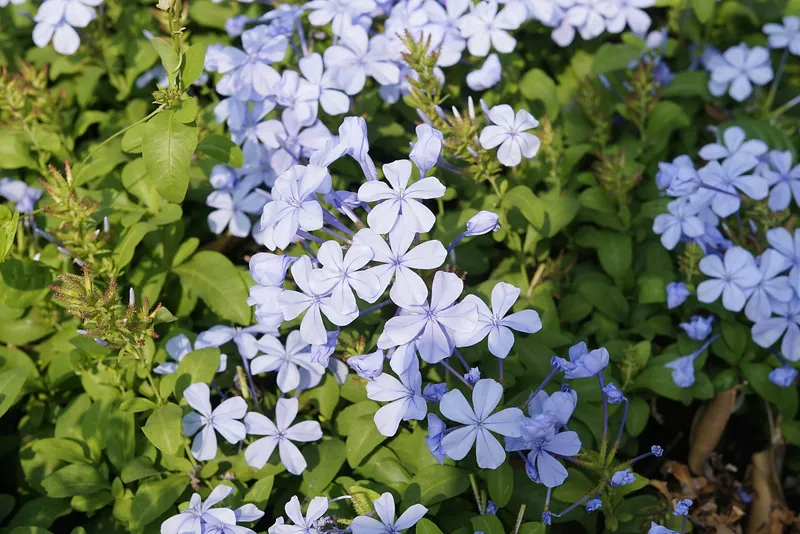
Sky-blue phlox-like clusters that flower for months.
Three weeks of blue
Every April, ancient woodlands across Britain flood with English bluebells — around half of the world's population grows on one island. The display lasts barely three weeks, the bulbs take five years to flower from seed, and a single careless footstep can crush leaves the plant needs to survive. It is the largest blue flower spectacle on earth, and the most fragile.
See blue flowers by seasonThe science of blue
Because no plant on earth has a blue pigment. Every blue flower in this gallery is an optical trick built from a red-purple molecule, and the recipe is hard enough that most species never manage it.
Out of roughly 280,000 flowering plant species, fewer than one in ten produce a flower we would call blue.
Roses, tulips and chrysanthemums simply lack the gene for the right pigment. Blue roses in a shop are dyed.
Delphinidin pigment, the right cell-sap pH and bound metal ions. Miss any one of them and the flower comes out pink or purple.
Delphinidin is an anthocyanin — the same family of pigments that colours red cabbage and blueberries. On its own it is reddish purple. It is named after the delphinium, one of the first blue flowers it was isolated from.
To look blue, the petal has to raise the pH of its cell sap and lock the pigment onto metal ions such as aluminium, magnesium or iron, often stacked with colourless co-pigment molecules. Cornflowers build a ring of fifteen molecules around a single metal atom.
Hydrangeas are the one flower you can retune at home. In acidic soil below about pH 5.5 the roots can take up aluminium and the flowers turn blue; in alkaline soil the same plant flowers pink.
Bees see ultraviolet, blue and green rather than red, and they are strongly drawn to blue and violet. The species that solved the chemistry were rewarded with some of the most loyal pollinators in the meadow.
Flower guide
Names, short facts and blooming seasons for the best-loved blue flowers, from woodland carpets to alpine rarities.
Centaurea cyanus
Once a weed of cornfields across Europe, now a conservation priority. Its blue comes from a pigment complex so precise it is still studied by chemists.
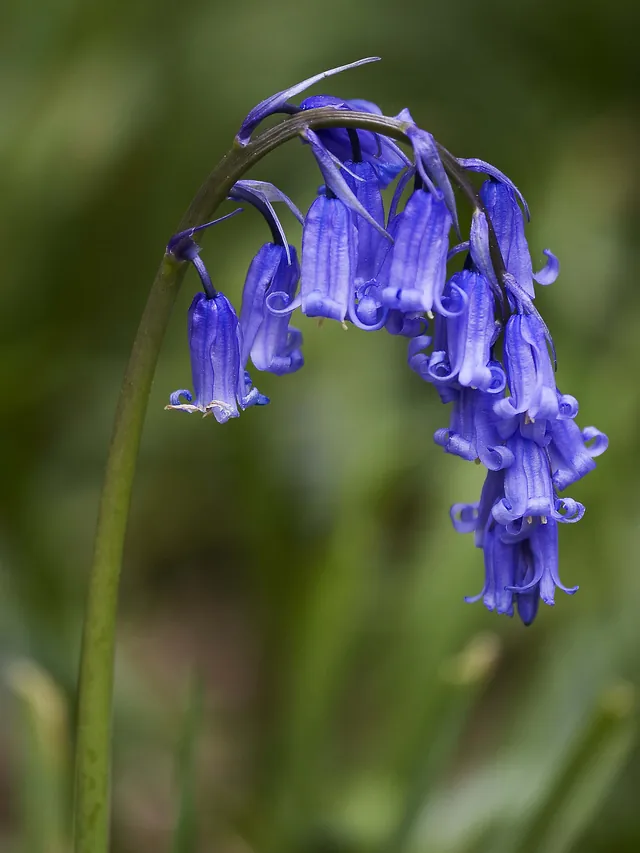
Hyacinthoides non-scripta
A protected woodland bulb that flowers before the tree canopy closes. The stem arches to one side — the quickest way to tell it from the upright Spanish bluebell.
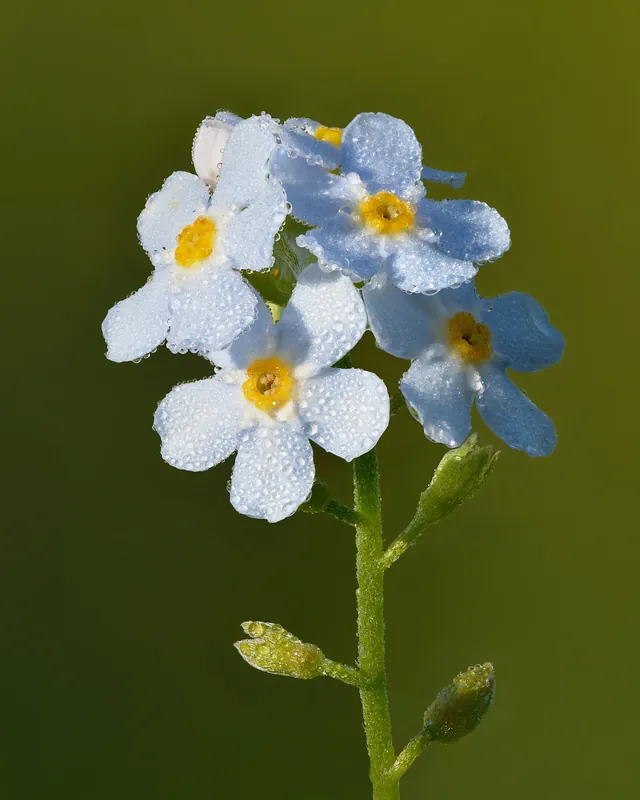
Myosotis
The classic flower of remembrance and a symbol of enduring love. Buds open pink and turn blue as the sap chemistry shifts inside the petal.
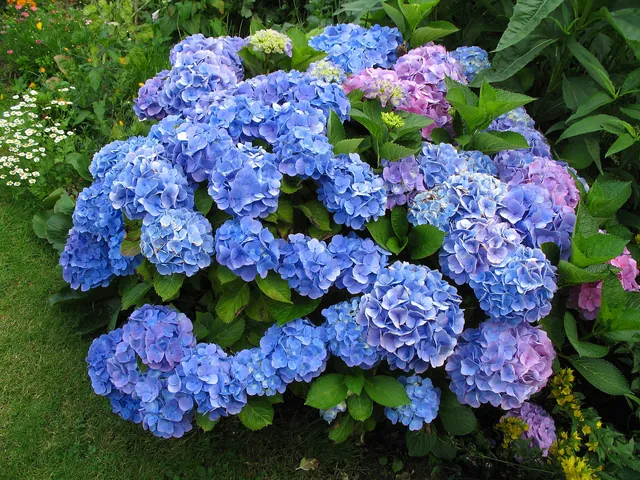
Hydrangea macrophylla
The colour is a soil test in flower form: acidic ground and free aluminium give blue, limey ground gives pink. The same shrub can show both at once.
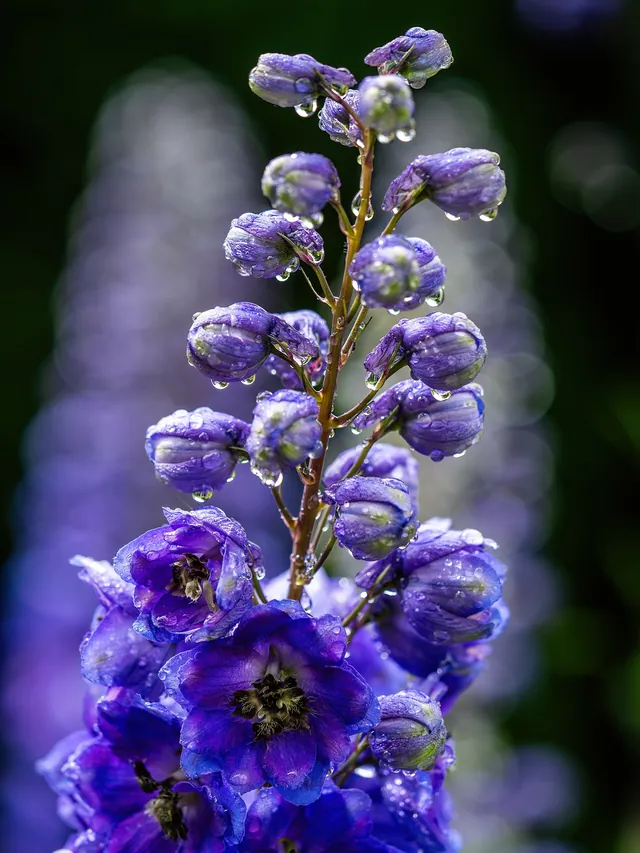
Delphinium elatum
The backbone of the blue border, reaching two metres in a good year. Delphinidin, the pigment behind almost every blue flower, is named after it.
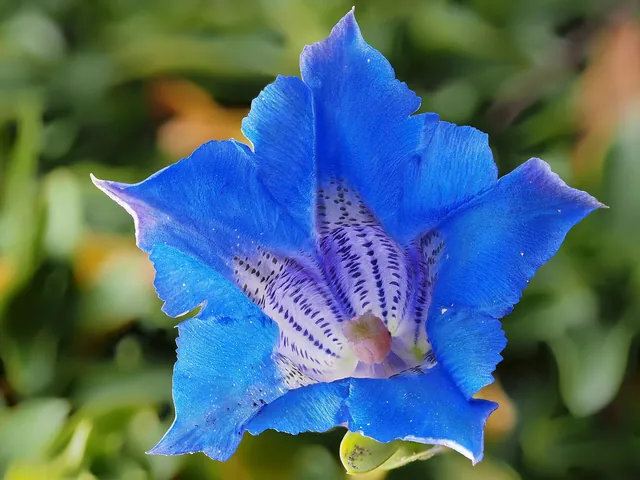
Gentiana acaulis
A cushion plant of limestone alps whose trumpets are so saturated that "gentian blue" became a colour name in its own right.
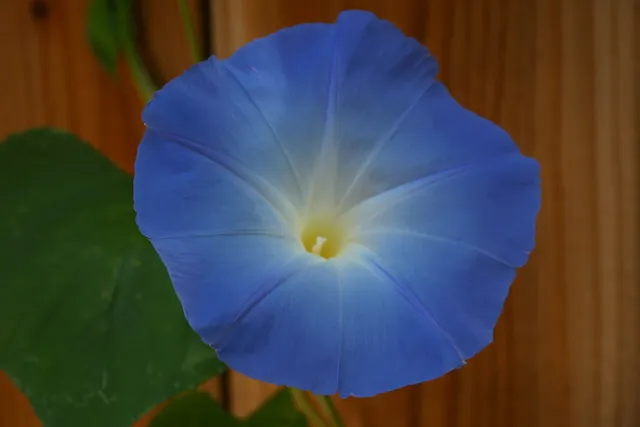
Ipomoea tricolor
Each trumpet lasts a single morning. The cultivar 'Heavenly Blue' opens a clear sky blue at sunrise and drifts towards pink as the sap acidifies.
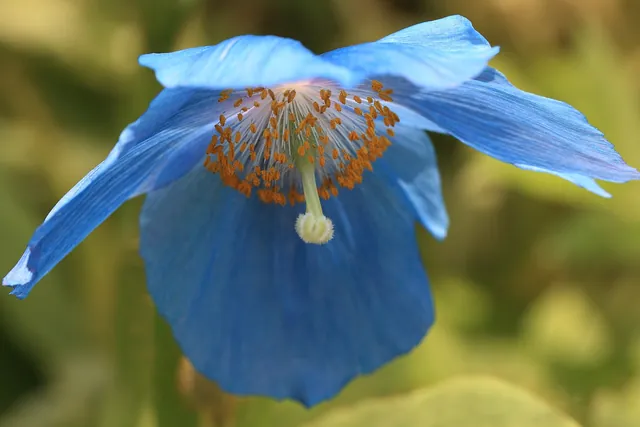
Meconopsis betonicifolia
Brought back from Tibet in the 1920s and an instant sensation. It wants cool damp summers and acid soil, which is why it thrives in Scotland and sulks elsewhere.
Symbolism
Blue is the colour of distance — of sky, sea and horizon. Because it is so hard for a plant to produce, blue flowers have always carried meanings of longing, loyalty and things just out of reach.
Blue lowers the temperature of a room and a border. It is the colour gardeners reach for when they want stillness.
The forget-me-not has stood for faithful love and memory since medieval Europe, and is worn today as a memorial flower.
The blaue Blume — the blue flower of German Romanticism — became the emblem of yearning for something never quite reached.
Blue is the traditional "something blue" of a wedding: fidelity, honesty and a calm beginning.
Blooming calendar
Blue peaks twice a year — once in the spring woods and once in the summer border. Here is when each flower shines.
Shades of blue
Blue flowers range from barely-there mist to an alpine blue so deep it looks painted. These six shades are sampled from the photos in the gallery.
#CBDCF7#9FC2EC#6C9BF5#2D6CDF#0B52D1#12327EQuestions
The best known blue flowers are cornflowers, bluebells, forget-me-nots, blue hydrangeas, delphiniums, blue irises, morning glories, grape hyacinths, gentians and the Himalayan blue poppy. Together they cover almost every shade from pale mist blue to deep gentian blue.
Plants have no blue pigment. Blue flowers are made indirectly from delphinidin, a red-purple anthocyanin that only looks blue when the petal cell sap is the right pH and the pigment is bound to metal ions such as aluminium or iron and to other co-pigment molecules. Getting all of those conditions right is difficult, so fewer than one in ten flowering plant species produce blue flowers.
No. Roses, tulips and chrysanthemums lack the genes to make delphinidin, so no naturally blue variety exists. Florists' blue roses are dyed white roses, and the genetically engineered Suntory Applause rose is closer to lavender than to true blue.
Bluebells, forget-me-nots, grape hyacinths, Siberian squill, blue irises, glory-of-the-snow and Texas bluebonnets are the main blue flowers of spring. Bluebell woods and squill carpets usually peak between late March and May.
Blue hydrangea flowers need acidic soil, roughly pH 5.5 or lower, and available aluminium. Gardeners keep the colour blue by adding aluminium sulphate and an acidic mulch such as pine needles. In alkaline soil the same plant produces pink flowers instead.
The photos come from Wikimedia Commons under Creative Commons or public domain licences. You can reuse them as long as you follow each licence, which usually means crediting the photographer and linking the licence. Full credits are listed at the bottom of this page.
FlowerBlue is a quiet corner of the web for the hardest colour in the garden. Scroll back through the gallery, find the blue you like best, and go and look for it outside.